
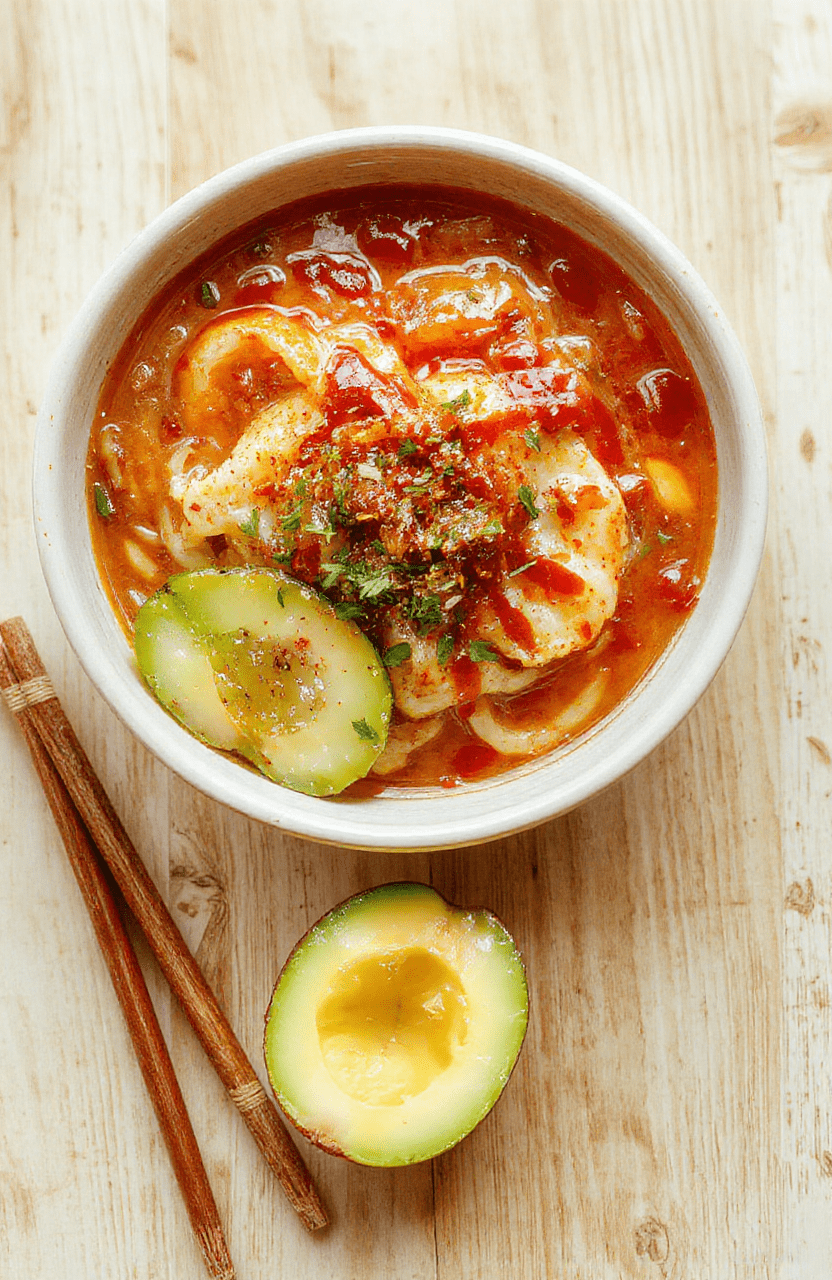
🔥 Spicy Gochujang Udon Noodles (Ready in 15 Minutes!) 🍜
1. Introduction
There’s something incredibly satisfying about a steaming bowl of spicy gochujang udon—thick, chewy noodles clinging to a glossy, umami-rich sauce with just the right kick of heat. This quick 15-minute udon recipe brings authentic Korean flair to your weeknight dinner without sacrificing depth or complexity. The balance of fermented soybean warmth from gochujang, the gentle sweetness of rice syrup, and a bright finish from lime and sesame oil creates an experience that’s both comforting and thrilling on the palate. Whether you’re short on time or craving bold flavor, this spicy udon dish delivers big.2. Why You’ll Love This Recipe
- ✅ Ready in 15 minutes—perfect for busy weeknights or when hunger strikes fast.
- ✅ Minimal cleanup—one pot (plus a bowl!) does most of the work.
- ✅ Versatile protein base—pairs beautifully with tofu, shrimp, chicken, or even leftover grilled meat.
- ✅ No-fail sauce formula—the gochujang base is forgiving and scales effortlessly.
- ✅ Wheat-free friendly (with swap)—use rice udon or soba for gluten-sensitive diets.
3. Ingredient Notes
The magic of this spicy udon lives in a few key ingredients—skimping here risks flavor imbalance.Gochujang is non-negotiable for depth—it’s a Korean fermented chili paste that brings umami, heat, and subtle sweetness. Look for Mount Kilman or Sunja’s brand at Asian grocers or online. Avoid “gochujang-style” sauces with excessive sugar; they lack complexity.
Udon noodles should be thick, chewy, and either fresh or dried (not instant ramen-style). Fresh udon cooks in 2–3 minutes and holds sauce beautifully. Dried udon takes 6–8 minutes but absorbs flavors well when not overcooked.
Sugar or rice syrup (like kanro syrup) tempers the heat and adds body. Maple syrup works in a pinch, but rice syrup adds a clean sweetness that’s less caramel-forward.
Toast sesame seeds sparingly—they’re fragrant and nutty when dry-toasted for just 1–2 minutes. Burn them, and bitterness ruins the dish.
Soy sauce or tamari provides salty backbone. Use low-sodium to avoid oversalting. Tamari offers a gluten-free option while retaining depth.
4. Kitchen Tools You Need
While minimal tools are required, having the right ones elevates speed and precision.For quick, even boiling, a reliable T-fal 14-Piece Hard Anodized Nonstick Cookware Set ensures even heat and easy cleanup—no more stuck noodles or scorched pans.
Don’t have time to toast sesame seeds manually? The Compact 6-in-1 Digital Air Fryer by Amazon Basics can toast them in 2 minutes at 350°F with zero Watching needed—just shake once.
When prepping veggies, the Fullstar Ultimate Veggie Prep Master slashes prep time on scallions, carrots, and bell peppers into seconds.
For serious noodle lovers, consider the Philips 7000 Series Pasta Maker with 8 Shaping Discs to craft fresh udon at home—thick, springy, and truly restaurant-quality.
5. How to Make Spicy Gochujang Udon Noodles
Phase 1: Prep & Sauce (5 minutes)
Whisk together 2 tablespoons gochujang, 1 tablespoon soy sauce (or tamari), 1 tablespoon rice syrup, 1 teaspoon sesame oil, and 1 clove minced garlic in a small bowl. Set aside. The sauce should be thick, vibrant red, and smell deeply savory. If it looks watery or too sweet, adjust before adding to the noodles.Phase 2: Cook Noodles (4 minutes)
Bring a pot of generously salted water to a boil. Add udon noodles and cook per package directions (2–3 minutes for fresh, 6–8 for dried). Critical tip: Stop cooking 1 minute *before* the package recommends—udon continues softening off-heat. Drain well, reserving ½ cup pasta water.Phase 3: Finish & Toss (2 minutes)
Heat a large skillet over medium. Add 1 tsp neutral oil, then stir-fry sliced bell pepper and mushrooms for 2 minutes until just tender-crisp. Pour in the gochujang sauce and bring to a gentle simmer. Add drained noodles and toss vigorously, adding reserved pasta water 1 tbsp at a time until the sauce clings slickly—not dry, not soupy. The sauce should coat the back of a spoon with a glossy sheen.6. Expert Tips for Success
Don’t skip the “wet pan test.” After draining noodles, run cold water over them *briefly* only if they’re sticking together—but don’t rinse away starch. The residual starch helps sauce cling.
Gochujang varies in heat. Start with 1½ tablespoons. After mixing, dip a spoon, let cool, and taste. Add remaining ½ tbsp only if needed.
Use warm noodles. Cold noodles shock the sauce and cause separation. Transfer drained noodles directly to the skillet.
Finishing oil matters. Finish with toasted sesame oil *off heat* to preserve its volatile aromatics. Stir in right before plating.
7. Variations & Substitutions
- Vegan version: use tamari, swap honey for maple syrup, and add pan-fried tofu or tempeh.
- Low-sodium: reduce soy sauce to ½ tbsp and add 1 tsp miso paste for depth.
- Extra protein: add shrimp in the last 2 minutes of stir-fry, or top with a fried egg.
- Noodle swaps: soba (buckwheat) adds nuttiness; rice vermicelli lightens the dish.
8. Storage & Reheating
Store leftover noodles (sauce included) in an airtight container for up to 3 days. The noodles will absorb sauce and soften—reheat gently in a skillet over medium-low with 1 tsp water or broth until piping hot. Stir in a drizzle of sesame oil before serving to revive shine.
Warning: Microwaving alone may make noodles gummy. Stovetop revival restores texture.
9. FAQ
Can I use instant ramen noodles? Not ideal. Ramen noodles are thin, curved, and overcook easily—they’ll turn mushy. Stick with thick udon or buckwheat soba.
My sauce is too spicy! What do I do? Add a splash of coconut milk or warm water to mellow heat, plus a squeeze of lime or orange juice for balance.
Can I make this ahead? Prep sauce and chop veggies in advance, but cook noodles fresh. Sauce stores well refrigerated for 1 week in a sealed jar.
What’s the best gochujang brand? Mount Kilman and Sunchang are top-tier for Authentic fermentation and low sugar. Avoid brands with corn syrup as the first ingredient.
10. Conclusion
This spicy gochujang udon proves that fast doesn’t mean flavorless. With a few powerhouse pantry staples and smart technique, you’s serving restaurant-worthy noodles in under 15 minutes. Pair it with our homemade peach lemonade for cooling contrast, or follow up with our creamy millionaire gnocchi for a satisfying carb-on-carb feast. Either way—eat hot, savor every chewy bite, and savor the speed. Print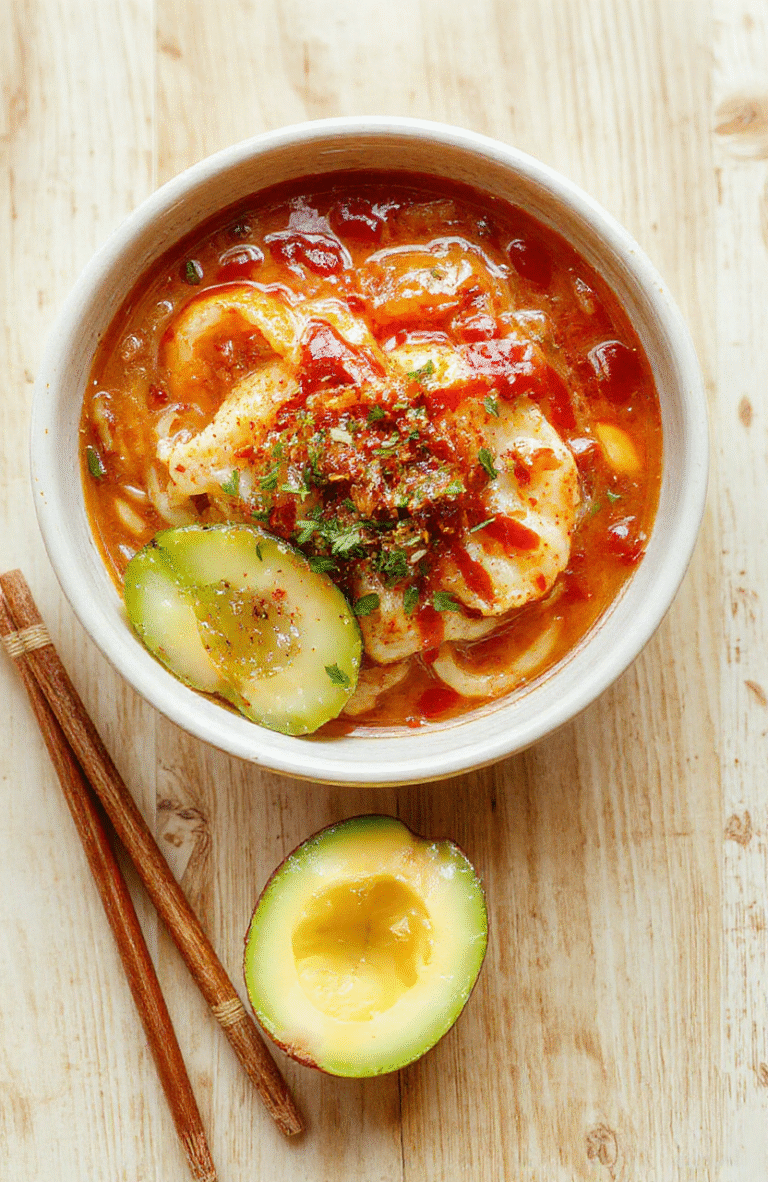
Spicy Gochujang Udon Noodles
Quick, spicy, and deeply flavorful — this 15-minute gochujang udon noodles recipe delivers authentic Korean-inspired comfort with minimal cleanup.
- Total Time: 15 minutes
- Yield: 2 servings
Ingredients
- 8 oz (225g) dried udon noodles
- 1 tbsp sesame oil
- 2 cloves garlic, minced
- 1 tbsp fresh ginger, grated
- 2 tbsp gochujang (Korean chili paste)
- 1 tbsp soy sauce
- 1 tsp honey or maple syrup
- 1 tbsp rice vinegar
- 1/4 cup vegetable broth or water
- 2 large eggs
- Sesame seeds and sliced green onions, for garnish
- optional: shredded nori, chili flakes
Instructions
- Bring a large pot of water to boil. Cook udon noodles according to package instructions (usually 3–5 minutes). Drain and set aside.
- While noodles cook, heat sesame oil in a large skillet over medium heat. Add garlic and ginger; sauté 30 seconds until fragrant.
- Stir in gochujang, soy sauce, honey, and rice vinegar. Add broth and simmer 2 minutes until slightly thickened.
- Add cooked udon noodles to the skillet and toss until evenly coated. Cook 1–2 minutes more to let flavors meld.
- Meanwhile, boil eggs for 6 minutes for soft yolks. Peel and halve.
- Serve noodles in bowls, top with halved eggs, sesame seeds, green onions, and nori if using.
Notes
- For gluten-free option, use certified GF udon or.substitute with rice noodles.
- Adjust spice level by reducing gochujang or adding more.
- Add protein like tofu or shrimp by sautéing separately and mixing in.
- Prep Time: 5 minutes
- Cook Time: 10 minutes
- Method: Stovetop
- Cuisine: Korean
- Diet: Vegetarian
Nutrition
- Serving Size: 1 bowl
- Calories: 420 Kcal
- Sugar: 7g
- Sodium: 780mg
- Fat: 12g
- Saturated Fat: 3g
- Unsaturated Fat: 8g
- Trans Fat: 0g
- Carbohydrates: 68g
- Fiber: 4g
- Protein: 14g
- Cholesterol: 185mg