
🔥 Spicy, Crunchy, and Irresistible: Real Kung Pao Noodles That Taste Like the Best Chinese Takeout (Ready in 30 Minutes!) 🔥
1. Introduction
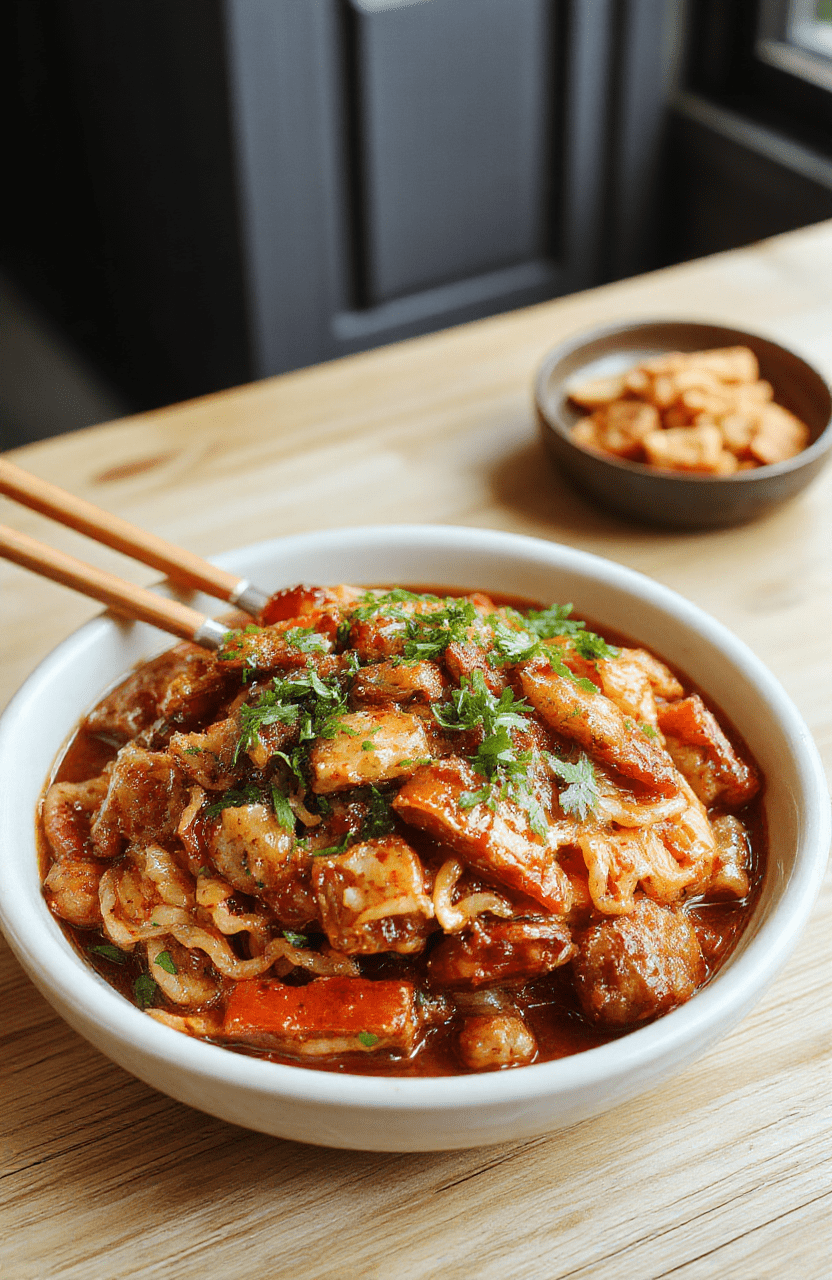
There’s something deeply satisfying about a steaming bowl of kung pao noodles—crisp peanuts, tender chicken, and chewy rice noodles tossed in a bold, glossy sauce that balances spicy, sweet, and savory like a pro chef intended. This isn’t the bland, soggy version you sometimes get at takeout spots. This is made-in-seconds, wok-hei flavor packed into your kitchen, with every bite delivering that chew, crunch, and kick we all crave.
If you’ve been disappointed by soggy noodles or overly sweet, sauce-heavy imitations, you’re not alone. But after years of refining this recipe (including a few fiery kitchen experiments 🌶️), I’ve cracked the code on authentic-tasting kung pao noodles that are easy, reliable, and ready in under 30 minutes—even for weeknights. Let’s get cooking.
2. Why You’ll Love This Recipe
- Ready in 30 minutes — faster than delivery, healthier, and tastes better.
- One-pan wonder — minimal cleanup and maximum flavor development.
- Endlessly customizable — swap chicken for tofu, shrimp, or veggies.
- Budget-friendly — pantry staples do most of the heavy lifting.
- Kid-approved (with mild version!) & date-night worthy — yes, really.
3. Ingredient Notes
Authentic kung pao noodles rely on layers of flavor—not heat alone. Here’s why each component matters:
Chicken — Boneless, skinless thighs (not just breast!) stay juicy under high heat. I dice them into ¾-inch cubes so they cook evenly and absorb the sauce beautifully.
Dried chili peppers — Use whole dried Sichuan peppercorns and arbol or guajillo chilies. The Sichuan pepper brings that signature mala (numbing-spicy) tingle. Don’t skip it if you can find it—though a pinch of crushed red pepper flakes works in a pinch.
Zha Jiang sauce — Not the same as hoisin! This fermented broad bean paste (from Lee Kum Kee or Lee’s) gives depth and umami. Dilute it with soy sauce and rice wine for balance.
Noodles —Fresh rice noodles (like rice vermicelli or flat “rice sticks”) hold up better than dried. If using dried, soak in warm water for 10 minutes first—overcooked noodles turn gluey.
Crunch factor — Fresh peanuts (not roasted & salted!) add texture. Toast them in the wok for 30 seconds just before serving to keep them crisp.
4. Kitchen Tools You Need
While you *can* use a large skillet, a wok delivers the high, even heat and proper tossing motion for真正的 kung pao noodles magic. That said, here are the tools that cut prep time and elevate results:
Philips 7000 Series Pasta Maker with 8 Shaping Discs — If you love fresh noodles, investing in a handmade maker is a game-changer. Roll, cut, and dry your own rice noodles for an ultra-authentic experience (and proudly impress guests).
T-fal 14-Piece Hard Anodized Nonstick Cookware Set — Perfect for home cooks who want professional-grade durability without the maintenance of cast iron. I use the 12-inch skillet daily for stir-fries—it heats evenly and cleans up in seconds.
Compact 6-in-1 Digital Air Fryer by Amazon Basics — Great for pre-toasting nuts or quick-roasting veggies (like bell peppers) before adding to your noodles. Saves wok time and keeps ingredients vibrant.
Fullstar Ultimate Veggie Prep Master — This mandoline-like tool makes mincing ginger and garlic effortless and consistent—no more uneven pieces burning in the wok. Worth every penny for efficient prep.
JoyJolt Airtight Glass Food Storage Set — Store any leftover sauce or prepped veggies in these leak-proof jars. They look beautiful on the counter and keep ingredients fresh for days.
5. How to Make Savory Kung Pao Noodles
Servings: 4 | time: 25–30 minutes
Prep Phase (10 mins)
Dice 1 lb chicken thighs into ¾-inch cubes. In a bowl, toss with 1 tbsp soy sauce, 1 tsp Shaoxing wine, 1 tsp cornstarch, and a pinch of white pepper—this “velvets” the chicken for tenderness.
Mix the sauce: 2 tbsp Zha Jiang sauce, 1 tbsp soy sauce, 1 tbsp Shaoxing wine, 1.5 tbsp rice vinegar, 1 tsp sesame oil, 1 tsp sugar, and 2 tsp cornstarch. Whisk until smooth. Pro tip: Always premix your sauce. Stir-frying moves fast—you don’t want soggy noodles from scrambling to measure!
Soak 8 oz fresh rice noodles in warm water for 5 minutes (drained well). Dice 1 red bell pepper, 1 green bell pepper, and slice 4 scallions (whites & greens separated). Toast ⅓ cup raw peanuts in a dry pan for 2 minutes. Set aside.
Stir-Fry Phase (8–10 mins)
Heat 2 tbsp peanut oil in your wok (or large skillet) over high heat until shimmering—but not smoking. Add chicken in a single layer. Sear 2–3 minutes per side until golden and cooked through. Transfer to a plate.
Reduce heat to medium-high. Add 1 tbsp oil, then 1 tbsp chopped ginger, 1 tbsp minced garlic, and 6–8 dried chilies. Stir 30 seconds until fragrant—don’t let them brown! You want that deep red aroma, not bitterness.
Toss in bell peppers and white parts of scallions. Stir-fry 1 minute until slightly tender-crisp. Return chicken to wok.
Bring sauce to room temp and stir well (cornstarch settles). Pour into wok. Toss constantly for 30–45 seconds until sauce thickens, shiny, and coats everything—it should look like a velvet glaze, not a glop.
Add noodles and toss vigorously for 1 minute. They’ll absorb the sauce and soften further. Turn off heat.
Stir in peanuts and green scallion tops. Serve immediately.
6. Expert Tips for Success
1. Heat control is everything. Your wok must be screaming hot. If ingredients sizzle on contact, you’re good. Too cool? You get steamed—not stir-fried—noodles.
2. “Wok hei” (breath of the wok) comes from high heat and minimal liquid. Preheat the wok 5 minutes before oil—it makes all the difference in that smoky, charred flavor.
3. Don’t crowd the pan. Cook chicken in batches if your wok isn’t huge. Steaming = mushy texture.
4. Use room-temp sauce. Cold sauce hitting a hot wok causes the cornstarch to seize and clump.
5. Finish with a splash of香油 (sesame oil). Add it off-heat to preserve its nutty perfume—heat ruins it fast.
7. Variations & Substitutions
Veggie Power: Swap chicken for extra-firm tofu (pressed & cubed) or tempeh. For a mushroom umami hit, use shiitakes sautéed until browned.
Gluten-Free: Use tamari instead of soy sauce and ensure Zha Jiang sauce is GF (or use coconut aminos + miso paste).
Low-Sugar: Omit sugar; extra Zha Jiang + splash of apple cider vinegar adds complexity without sweetener.
Extra Crunch: Toasted cashews or pepitas work in a pinch. Celery adds a fresh bite—add with bell peppers.
8. Storage & Reheating
Store noodles (without peanuts) in an airtight container for up to 3 days. Peanuts lose crunch in the fridge.
Reheat in a skillet over medium-high with 1 tsp water or oil—stir constantly. The noodles will absorb moisture, so a splash of water or broth helps revive them. Microwaving makes them gummy—avoid it!
9. FAQ
Q: Can I use spaghetti or spaghetti squash?
A: They’ll fall apart or lack authenticity. Try brown rice noodles or soba for a gluten-free pasta substitute—but rice noodles remain ideal.
Q: My sauce is too spicy. How do I fix it?
A: Add a splash more rice vinegar and a Teaspoon of honey or maple syrup. A dollop of peanut butter also helps balance heat while adding richness.
Q: What if I don’t have Sichuan peppercorns?
A: Use ½ tsp crushed red pepper flakes + pinch of black pepper. It won’t have the numbing effect, but heat and complexity remain.
Q: Can I make this ahead for meal prep?
A: Yes! Prep sauce and chop veggies in advance. Store separately. Cook noodles fresh when reheating for best texture.
10. Conclusion
There you have it—a kung pao noodles recipe that respects tradition while fitting your real-life kitchen flow. It’s spicy, aromatic, chewy-crisp, and deeply satisfying. Whether you’re craving a bold dinner idea, need a crowd-pleaser for guests, or just want to rebel from takeout, this dish delivers every time.
Once you taste that perfect balance of heat, sweet, and umami—plus that snap of peanuts—you’ll never go back to generic “kung pao” again. And if you’re loving this one-pan magic, check out our Sweet & Spicy Honey Pepper Chicken or our Easy Buffalo Chicken Sliders for more weeknight wins.
Now go grab your wok—and may your noodles be perfectly chewy and your spice level just right 🌶️🍜
Print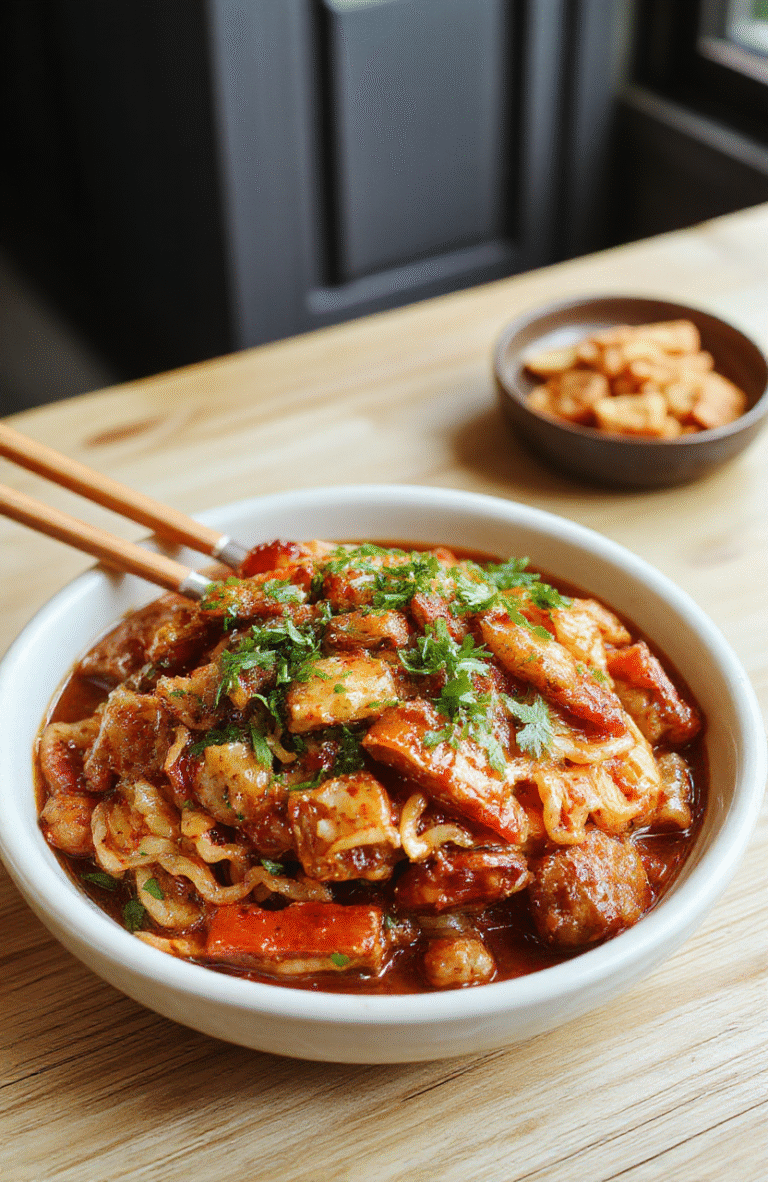
Savory Kung Pao Noodles Recipe
A quick weeknight dinner with bold Szechuan flavors — spicy, savory, and slightly sweet — featuring tender chicken, crunchy peanuts, and crisp vegetables.
- Total Time: 35 min
- Yield: 4 servings
Ingredients
- 12 oz dried spaghetti or lo mein noodles
- 1 lb boneless, skinless chicken breast, cut into 1-inch cubes
- 2 tbsp soy sauce (divided)
- 1 tbsp Shaoxing wine or dry sherry
- 1 tsp cornstarch
- 2 tbsp peanut oil (divided)
- 3 cloves garlic, minced
- 1 tbsp fresh ginger, grated
- 4 oz mixed bell peppers (red, green), sliced
- 1 cup baby bok choy, chopped
- 1/3 cup roasted peanuts
- 2 tbsp干辣椒 (dried red chilies), sliced
- 1 tbsp Szechuan peppercorns, lightly crushed
Instructions
- Cook noodles according to package instructions; drain and set aside.
- Toss chicken with 1 tbsp soy sauce, Shaoxing wine, and cornstarch; let marinate 10 mins.
- Heat 1 tbsp peanut oil in a large wok or skillet over high heat. Stir-fry chicken until golden (4–5 mins); remove and set aside.
- Add remaining oil, garlic, ginger, dried chilies, and Szechuan peppercorns; stir-fry 30 secs until fragrant.
- Add bell peppers and bok choy; stir-fry 2–3 mins until crisp-tender.
- Return chicken to pan. Add cooked noodles, remaining soy sauce, and peanuts. Toss until evenly coated and heated through (1–2 mins).
Notes
- For extra heat, add more dried chilies or a dash of chili oil.
- Vegetarian option: Replace chicken with extra-firm tofu or tempeh.
- Nut-free option: Substitute sunflower seeds for peanuts.
- Prep Time: 20 min
- Cook Time: 15 min
- Method: Stir-Fry
- Cuisine: Chinese
- Diet: None specified
Nutrition
- Serving Size: 1.5 cups
- Calories: 492 Kcal
- Sugar: 4g
- Sodium: 680mg
- Fat: 16g
- Saturated Fat: 3g
- Unsaturated Fat: 12g
- Trans Fat: 0g
- Carbohydrates: 61g
- Fiber: 4g
- Protein: 27g
- Cholesterol: 72mg