
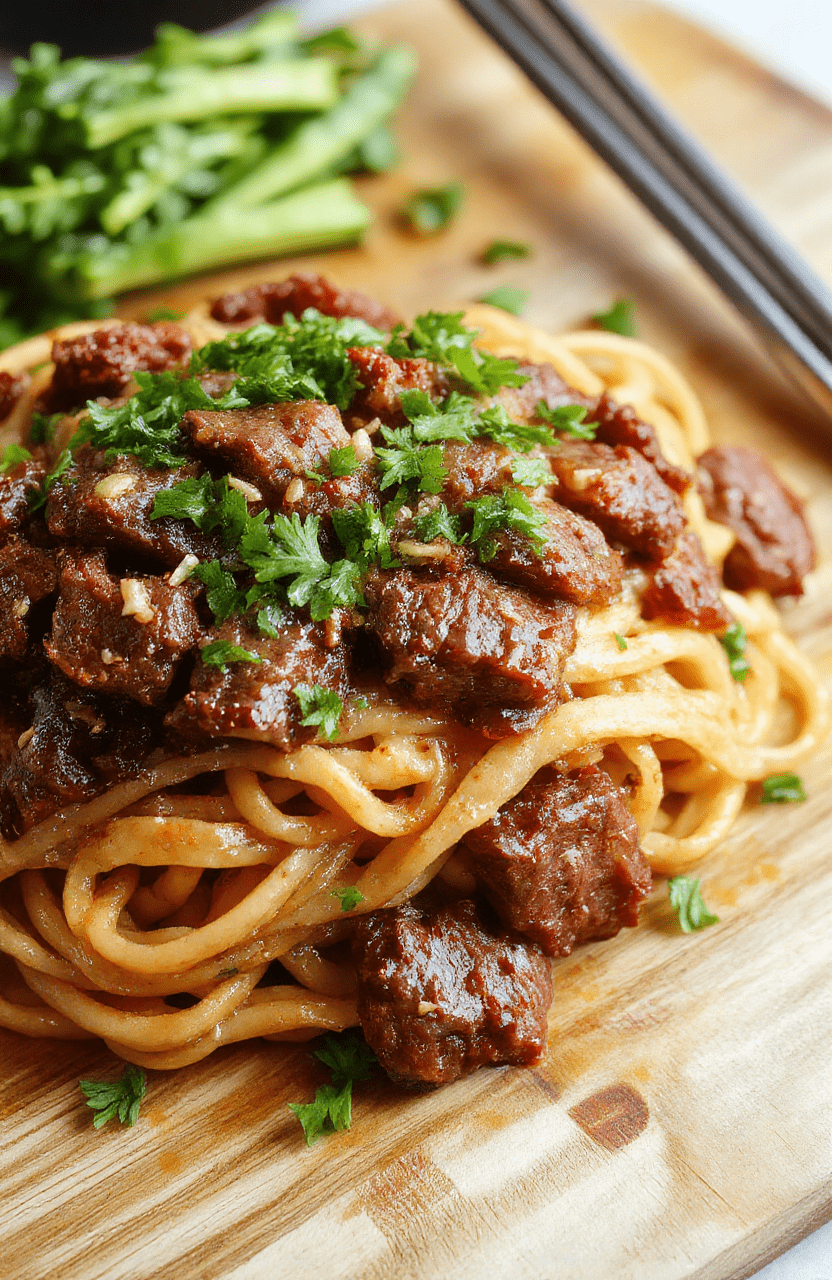
🔥 Quick Mongolian Beef Noodles Recipe with Bold Glaze & Crisp-Tender Veggies 🍜
1. Introduction
Craving something rich, savory, and seriously satisfying—yet still doable on a busy weeknight? This Mongolian beef noodles recipe delivers restaurant-worthy flavor in under 30 minutes, with tender strips of beef caramelized in a glossy soy-ginger-sesame glaze, tossed with crisp-tender broccoli and chewy rice noodles. Unlike takeout versions that lean too sweet or salty, my version balances umami depth with a subtle heat,thanks to fresh garlic, ginger, and a touch of gochujang (or red pepper flakes if you prefer). It’s fast, flexible, and impressively versatile—perfect for meal prep, date-night in, or sneakily impressing your pickiest eater. If you love weeknight mongolian beef or easy mongolian beef cooked with care, you’re in the right kitchen.
2. Why You’ll Love This Recipe
- ✔️ Ready in 25–30 minutes—ideal for impromptu weeknight dinners
- ✔️ One-pan cooking (stovetop only), meaning fewer dishes and more flavor retention
- ✔️ Gluten-free adaptable (swap soy sauce for tamari)
- ✔️ Balanced flavor profile: savory, slightly sweet, with a whisper of bright garlic-ginger kick
- ✔️ Meal-prep friendly: keeps beautifully in the fridge for up to 4 days
3. Ingredient Notes
The magic in a great mongolian beef stir fry comes from quality, balanced ingredients. Here’s how to level up:
• Flank steak or skirt steak: Thinly sliced against the grain ensures tenderness. Freeze for 20 minutes before slicing for paper-thin, uniform cuts. Grass-fed works great, but don’t skip the quick marinade!
• Sesame oil: Always use toasted sesame oil—it’s the soul of the flavor. Add it *at the end* to preserve its nutty aroma; cooking it over high heat can turn bitter.
• Fresh ginger & garlic: Mince them finely or use a microplane. Pre-minced jars lack brightness and introduce extra sugar/preservatives.
• Rice noodles (rice sticks): I recommend thin or medium width for optimal chew. Soak in hot (not boiling) water for 6–7 minutes until pliable but still firm—they’ll finish cooking in the wok.
• Hidden umami booster: A splash of fish sauce (or vegetarian oyster sauce) deepens richness without overpowering. Try 1 tsp—it’s undetectable but deeply satisfying.
4. Kitchen Tools You Need
You don’t need fancy gadgets—but having the right ones makes everything smoother. Two standout tools I rely on for this dish:
• The T-fal 14-Piece Hard Anodized Nonstick Cookware Set features a deep, heavy-bottomed wok pan perfect for high-heat stir-frying. The nonstick surface prevents delicate noodles from sticking and makes cleanup a breeze—no morescrubbing charred soy residue off!
• For meal prep lovers: the JoyJolt Airtight Glass Food Storage Set keeps leftovers fresh, odor-free, and stackable in the fridge for up to 4 days. Glass prevents flavor transfer, and the labels? Game-changer for quick grab-and-go lunches.
Curious about other kitchen upgrades I use daily? From the Ninja Foodi Smart XL Indoor Grill & Air Fryer Combo for crispy extra-bark beef to the KitchenAid Artisan 5-Quart Stand Mixer for whipping up homemade garlic oil—each tool has earned its spot on my counter. And if you love pasta? The Philips 7000 Series Pasta Maker lets you craft egg noodles fresh in minutes—perfect for a wheat-based swap!
5. How to Make Quick Mongolian Beef Noodles
This is a streamlined, high-heat stir-fry method—think speed with control. Every step builds toward that glossy, clingy sauce and tender-crisp texture.
Phase 1: Prep & Marinate (5 minutes)
Thinly slice 1 lb flank steak against the grain (¼-inch thick). In a bowl, whisk 2 tbsp soy sauce, 1 tbsp rice wine (or dry sherry), 1 tsp cornstarch, ½ tsp sesame oil, and ¼ tsp black pepper. Add beef and toss to coat. Let sit 10 minutes while you prep other ingredients.
Meanwhile, whisk sauce: 3 tbsp soy sauce, 2 tbsp water, 1 tbsp brown sugar, 1 tbsp rice vinegar, 1 tsp gingerpaste (or freshly grated), 1 tsp garlicpaste (or minced), ½ tsp gochujang (optional), and 1 tsp toasted sesame oil. Set aside.
Slice 1 cup broccoli florets and 1 thin-sliced carrot. Cook noodles per package instructions (al dente!), then rinse under cold water and toss with ½ tsp neutral oil to prevent clumping.
Phase 2: Stir-Fry with Precision (12 minutes)
Heat 2 tbsp neutral oil (like avocado or canola) in a wok or large skillet over medium-high until shimmering—just before smoking. Add beef in a single layer (work in batches if needed) and sear 1 minute per side until browned but *not* cooked through. Transfer to a plate.
Reduce heat to medium. Add 1 tbsp oil, then broccoli and carrot. Stir-fry 3–4 minutes until bright green and tender-crisp. Push veggies aside, add remaining 1 tsp garlic and 1 tsp ginger, and sauté 30 seconds until fragrant.
Return beef + juices to the pan. Give sauce a quick stir ( starch settles!) and pour in. Stir constantly 1 minute until sauce thickens and clings—this is where color and flavor unite.
Turn off heat. Add cooked noodles and toss *gently but thoroughly* until evenly coated. Stir in 1 tbsp sesame oil for aroma and a handful of sliced green onions.
Phase 3: Serve & Savor (2 minutes)
Divide into bowls. Top with sesame seeds, extra green onions, and for heat lovers—a drizzle of chili oil. Serve immediately while noodles are still glossy and springy.
6. Expert Tips for Success
• Cold pan, hot start: Always bring beef to room temp before cooking, but make sure your wok is *hot* before adding oil. This ensures a clean sear, not steam.
• Sauce-first rule: Never add sauce to a dry pan—your cornstarch will clump. Have it mixed and ready beside the stove (mise en place is non-negotiable here).
• Noodle timing matters: Undercook noodles by 1 minute—they’ll absorb sauce and finish cooking in residual heat. Overcooked pasta turns mushy in stir-fries.
• Acid balance: If sauce feels too sweet, add a squeeze of lime or extra rice vinegar at the end. Taste before serving!
• Prevent soggy veggies: Do *not* cover the pan while stir-frying. Steam ruins crisp-tender texture. Keep the heat high and motion constant.
7. Variations & Substitutions
• Protein swap: Use sliced chicken breast (add ½ tsp baking soda to marinade for tenderness) or firm tofu (press & toss in cornstarch for extra crisp).
• Noodle freedom: Swap rice noodles for spaghetti (yes, inspired by this fave Asian-style ground beef spaghetti!), udon, or gluten-free buckwheat soba.
• Vegetarian Mongolian: Use tempeh, seitan, or mushroom medley (shiitake + oyster mushrooms for meaty texture). Increase ginger & garlic slightly.
• Spice it up: Add 1 tsp sambal oelek or ½ tsp crushed red pepper flakes with the sauce. For authentic Mongolian heat, look for *ma la* seasoning (Sichuan peppercorns + chili oil).
• Lower sodium: Use 50% less-sodium soy sauce and boost herbal notes with fresh cilantro stems or a spoonful of hoisin (check labels—some add sugar).
8. Storage & Reheating
Store in airtight containers (like the JoyJolt Glass Food Storage Set) refrigerated for up to 4 days. Sauce may thicken—add a splash of water or broth when reheating.
• Stovetop method: Warm in a skillet over medium, stirring frequently, until heated through. This revives texture better than microwaving.
• Air fryer trick: For extra crispy edges, air fry leftovers at 375°F for 3–4 minutes (stirring once). Ideal for a “second-day” crunch boost!
Freezing isn’t recommended—noodles get gummy, and veggies soften too much. Best enjoyed fresh!
9. FAQ
Q: Can I use beef tenderloin instead of flank?
A: Yes—but it’s more expensive and cooks faster. Sear just 45 seconds per side. The tenderness is worth it for special occasions!
Q: My sauce didn’t thicken. What went wrong?
A: Likely two things: (1) cornstarch settled in the bowl—give sauce a good stir *immediately* before adding, or (2) the pan was too cool. Sauce needs a rolling simmer to activate thickeners.
Q: Is this recipe truly gluten-free?
A: Only if you use tamari ( certified GF) instead of soy sauce and ensure your broth/vinegar are GF. Many rice noodles are GF, but always check labels—some include wheat starch.
Q: How do I prevent noodles from sticking together?
A: Toss cooled noodles with ½ tsp neutral oil *right after draining* and spread them flat on a tray—don’t pile them. Stir-fry them in small batches at the end to avoid clumping.
10. Conclusion
There you have it: a Quick Mongolian Beef Noodles recipe that proves weeknight meals don’t have to sacrifice flavor—or joy. With its bold glaze, crisp vegetables, and perfectly tender beef, this stir-fry earns a regular spot on my dinner radar. Pair it with a simple cucumber salad and a crisp sake or ginger beer for a complete experience. Give it a try, and let me know your favorite add-in in the comments below. And if you loved this, don’t miss my 30-minute turkey teriyaki bowls or that indulgent creamy coconut chicken for next-level comfort. Happy cooking!
Print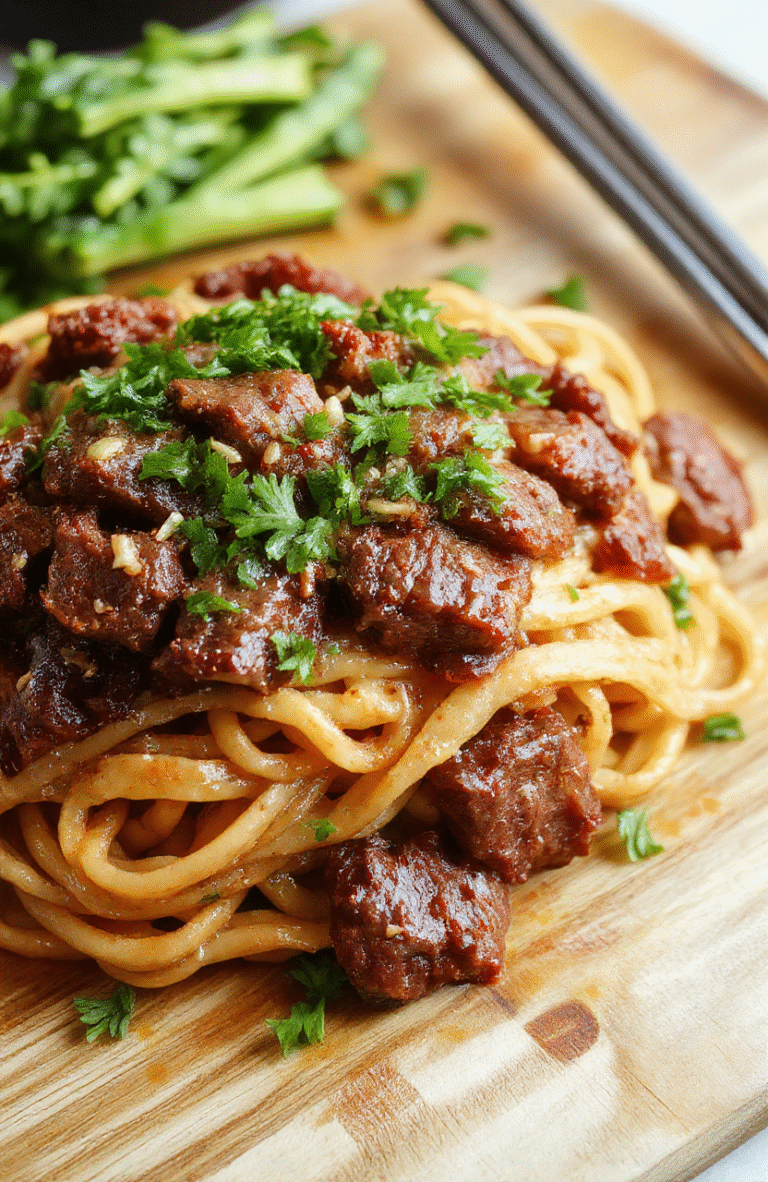
Quick Mongolian Beef Noodles Recipe
This Quick Mongolian Beef Noodles recipe delivers bold Asian flavors in under 30 minutes—perfect for busy weeknights. Tender beef strips, colorful veggies, and chewy rice noodles come together in a glossy ginger-soy glaze.
- Total Time: 25 minutes
- Yield: 4 servings
Ingredients
- 1 lb flank steak, thinly sliced against the grain
- 8 oz rice noodles (or lo mein noodles)
- 2 tbsp soy sauce
- 1 tbsp cornstarch
- 1 tbsp sesame oil
- 2 tbsp vegetable oil, divided
- 3 cloves garlic, minced
- 1 tbsp fresh ginger, grated
- 1 red bell pepper, sliced
- 1 cup snap peas
- 2 green onions, chopped (plus extra for garnish)
- 2 tsp brown sugar
- 1 tsp Sriracha (optional)
- Sesame seeds, for garnish
Instructions
- Cook rice noodles according to package directions; drain and toss with ½ tsp sesame oil to prevent sticking.
- In a bowl, toss beef slices with 1 tbsp soy sauce, 1 tbsp cornstarch, and ½ tsp sesame oil. Let marinate 10 minutes.
- Heat 1 tbsp vegetable oil in a large skillet or wok over high heat. Add beef and stir-fry 2–3 minutes until browned. Remove and set aside.
- Add remaining oil to the same pan. Sauté garlic and ginger 30 seconds until fragrant.
- Add bell pepper and snap peas; stir-fry 2–3 minutes until crisp-tender.
- Return beef to pan. Add remaining soy sauce, brown sugar, Sriracha (if using), and 2 tbsp water. Toss to coat.
- Add cooked noodles and toss gently until everything is well combined and heated through.
- Garnish with green onions and sesame seeds before serving.
Notes
- For extra flavor, add a splash of rice vinegar or lime juice before serving.
- Substitute zucchini noodles for a low-carb option.
- Make ahead: prep vegetables and marinate beef up to 1 day in advance.
- Prep Time: 15 minutes
- Cook Time: 10 minutes
- Method: Stir-Fry
- Cuisine: Chinese-American
- Diet: No Dietary Restriction
Nutrition
- Serving Size: 1 cup
- Calories: 380 Kcal
- Sugar: 4g
- Sodium: 620mg
- Fat: 14g
- Saturated Fat: 3.5g
- Unsaturated Fat: 9g
- Trans Fat: 0g
- Carbohydrates: 42g
- Fiber: 3g
- Protein: 28g
- Cholesterol: 65mg